Issue 001 · September 2, 2026
THE CREATURE BEFORE MONEY
A history of the room you were never invited into.
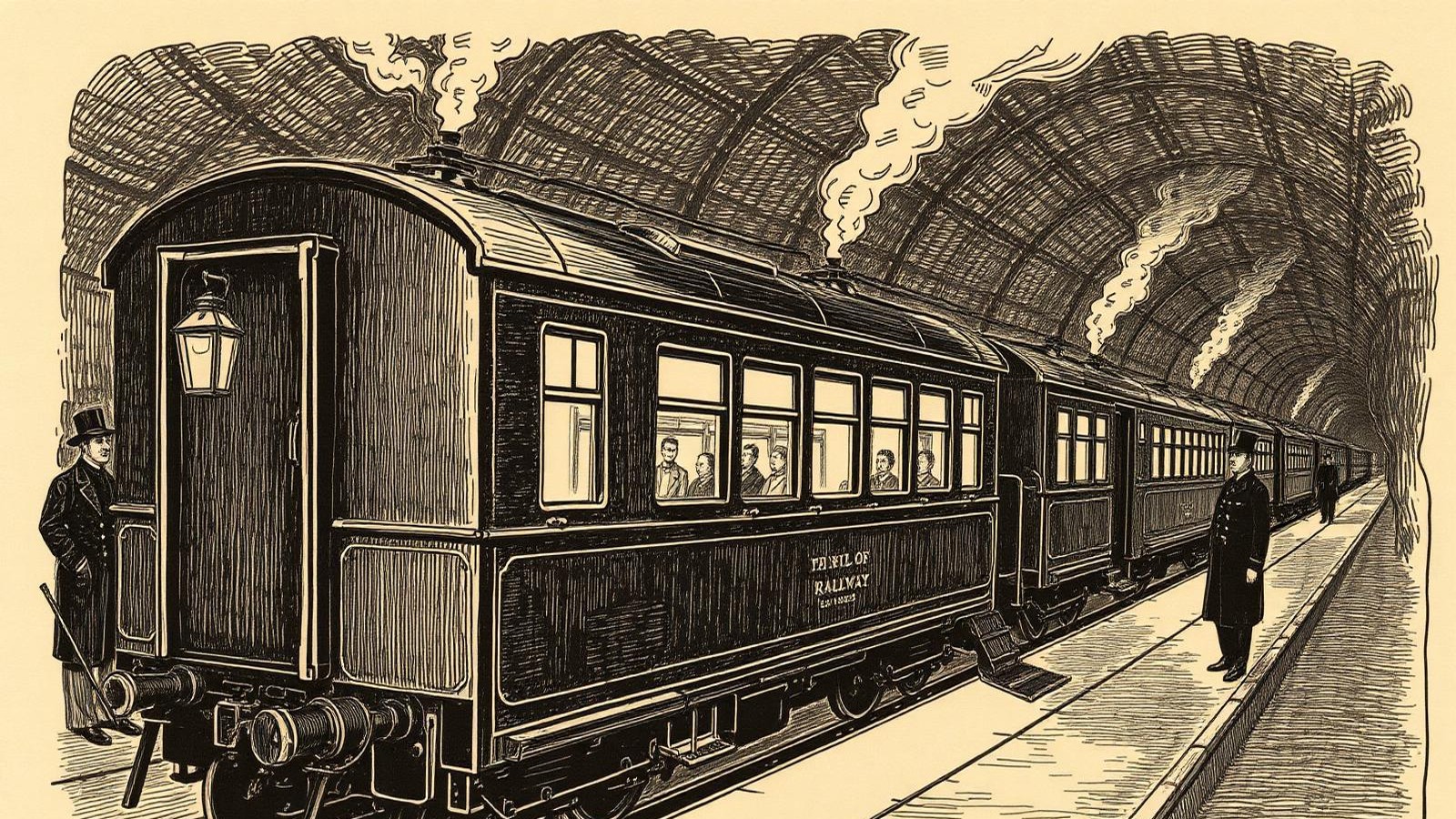
In November 1910, most of America was traveling in coach.
The seats were hard, the cars were cold, and smoke from the engine found its way through cracks no one could see. But at the far end of a New Jersey railway platform sat a different kind of car. Its black exterior was polished. Brass fixtures caught the station light. Inside were mahogany walls, velvet curtains, expensive cigars and men whose names carried enough financial weight to move governments.
The car bore one word: ALDRICH.
Its passengers arrived separately. They had been instructed not to acknowledge one another inside the station. Once aboard, they abandoned their last names and addressed each other only as Nelson, Paul, Frank, Piatt, Harry and Arthur. To anyone who asked, they were wealthy men traveling south to hunt ducks.
They were not going to hunt ducks.
Their destination was Jekyll Island, a private resort off the coast of Georgia whose membership included some of the richest and most powerful men in the country. For more than a week, the travelers disappeared behind its gates and worked on a plan for a new American monetary system. The meeting remained secret for years because its participants understood that the public would not welcome a banking proposal written in private by bankers with deep connections to Wall Street.
This is not speculation. Even the Federal Reserve's own historical account acknowledges that the gathering was conducted in secrecy, that its participants concealed their identities and that the plan developed there laid part of the foundation for the Federal Reserve System created in 1913.
G. Edward Griffin's The Creature from Jekyll Island describes the meeting as the conception of a banking cartel. The Federal Reserve's historians describe it as a response to genuine defects in an unstable banking system that had suffered repeated financial panics. Valencia Cross begins where those two accounts collide, because history is rarely as clean as either its defenders or its prosecutors would have us believe.
America did have a banking problem. Financial panics destroyed businesses, froze credit and wiped out ordinary depositors. The country needed reform. But necessity and power often enter through the same door, and once inside, it becomes difficult to determine which one is making the decisions.
That is where the creature lives.
The Creature Is Older Than Jekyll Island
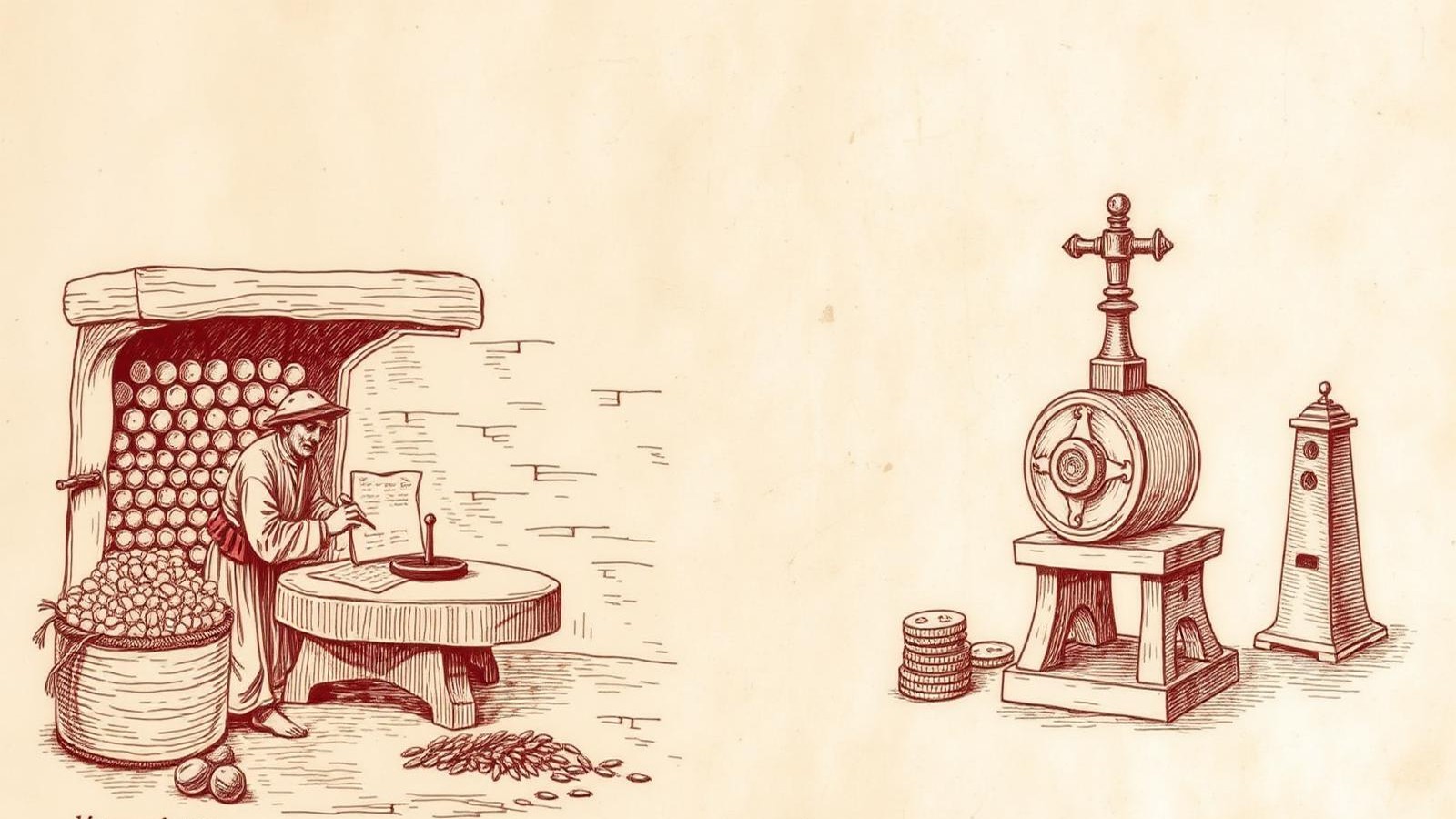
The creature was not born in 1910. It was not born in America. It was not born with the Federal Reserve, the Bank of England or the first gold coin.
It existed before money had a face.
It lived in the ancient storehouse where one person counted the grain and another person had to trust the count. It lived inside the clay tablet that recorded who owed what, inside the royal seal that determined which metal was acceptable and inside the ruler's decision to shave a little silver from every coin while demanding that the public continue accepting it at full value.
The creature is not one banker, one family, one political party or one institution. It is the recurring advantage of those standing close enough to the machinery of value to understand a change before everyone else is forced to live with it.
Before modern money, power belonged to those who controlled the harvest, the land, the ledger and the army. Once coins appeared, power moved toward those who controlled the mint. When paper claims replaced the movement of heavy metal, it moved toward those who issued the paper. When national debt became the bridge between governments and banks, it moved toward the institutions capable of financing the state. When markets became electronic, it moved toward the networks, terminals, algorithms and private conversations capable of acting before the public could understand what had happened.
The form changed. The distance remained.
There has always been a room in which value is discussed before value is announced.
War widened that room. A government forced to collect the entire cost of a war immediately from its population might soon discover how conditional public enthusiasm can be. Borrowing allowed the cost to be pushed forward. Expanding the supply of money allowed part of it to be hidden inside rising prices. Citizens still paid, but the invoice arrived slowly, mixed into food, rent, wages, taxes and the declining purchasing power of their savings.
Colonial America learned this early. Massachusetts issued paper money in 1690 after a failed military expedition left the government unable to pay its soldiers. The notes were accompanied by promises that the issue would be limited and eventually redeemed. The promises did not survive the need for more money. During the American Revolution, the Continental Congress turned again to paper currency on an enormous scale. The currency depreciated so severely that “not worth a Continental” entered the American language.
The pattern would return in different forms: a crisis, an urgent need for money, a temporary measure, a permanent expansion and a public that understood the consequences only after prices had moved.
The Bank of England emerged in 1694 from a partnership between government borrowing and private finance while England was at war. America fought repeatedly over central banking before establishing the Federal Reserve in 1913. Two world wars expanded the machinery of sovereign debt and central-bank finance. The international system constructed at Bretton Woods tied currencies to the dollar and the dollar to gold, until 1971, when President Richard Nixon suspended the dollar's convertibility into gold. What had once been presented as temporary became the architecture of the world we now inhabit.
From that point forward, the dollar rested not on redemption into metal but on the power, productive capacity, institutions and credibility of the United States. Money became increasingly abstract, and the people closest to its creation, distribution and repricing became increasingly important.
For the ordinary person, money remained physical in its consequences. It was the grocery bill, the mortgage, the paycheck, the rent increase and the amount left over on Friday. But at the highest levels of the system, money became something else: liquidity, collateral, duration, leverage, basis points, swap lines, credit facilities and risk-weighted assets. The language became more sophisticated at precisely the moment the consequences became more personal.
Complexity became a gate.
The Room Where the Future Arrives First
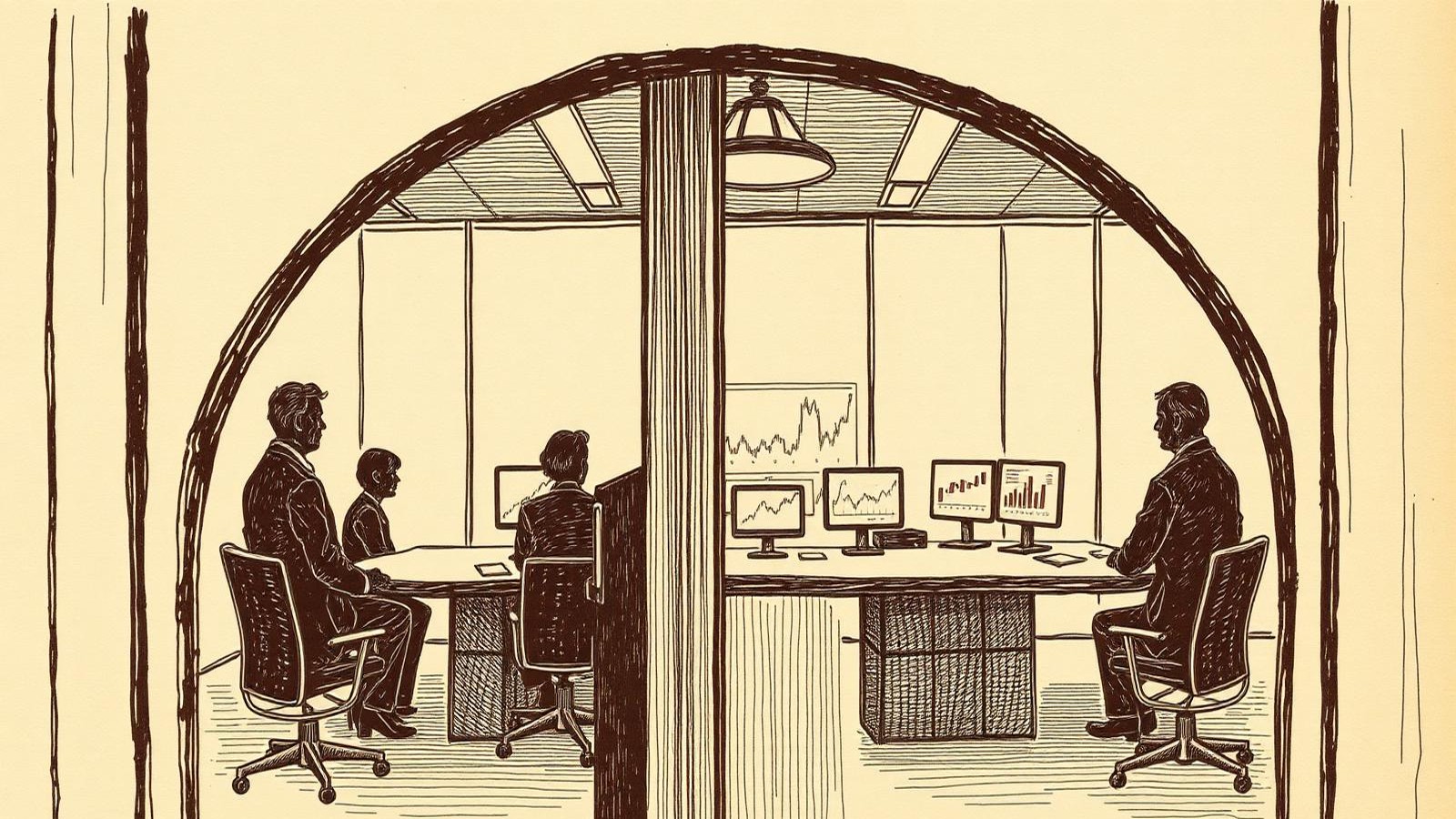
Today, the private railway car has been replaced by encrypted messages, closed investor calls, private dinners, board presentations, government briefings, Bloomberg terminals and group chats whose participants already know one another's names.
The whispers are faster now.
A chief executive's departure may surprise the public, but the board has been discussing succession for months. A company may announce that it has lost a major contract, but competitors were already hiring in anticipation. A bank may appear healthy in the morning and require rescue by Sunday evening, while counterparties have spent the entire week quietly reducing their exposure. A hedge fund can be forced to unwind a position, but the borrower, prime broker and clearing institutions experience the pressure before the public sees the forced selling appear on a chart.
The public receives an event. The people inside the machinery experience a sequence.
This does not mean every market movement is a conspiracy. It means conspiracy is often unnecessary. Shared incentives, unequal access, professional relationships and simple proximity can produce the same advantage without anyone meeting in a dark room and agreeing to deceive the world.
Nepotism is not an occasional infection in American life. It is one of its oldest distribution systems. The language changes—legacy, relationship, referral, network, trusted circle—but the door still recognizes certain names. The qualified outsider is asked to demonstrate potential. The connected insider is allowed to develop it after being admitted.
Failure behaves differently inside that circle. At the bottom, failure is evidence that someone was never good enough. At the top, failure becomes experience. A ruined company becomes a restructuring. A catastrophic trade becomes a lesson in risk. A government investigation becomes a temporary disruption. A person can fall from one boardroom and land in another before the public has finished reading what happened in the first.
Failure climbs ladders faster when someone has already reserved the next rung.
Nowhere is the imbalance clearer than in the relationship between politics and markets. Members of Congress participate in hearings, receive briefings, shape legislation and influence industries while lawmakers, spouses and dependent children may still own or trade many of the securities affected by those decisions. The law requires certain transactions to be disclosed, but the public may not learn about them until weeks after they occurred. Official congressional guidance allows as many as 45 days after a transaction for some disclosures.
Whether every politician beats the market is almost beside the point. The voter is asked to trust a system in which the person writing the rules can stand closer to the information than the person living under them.
This is how the creature survives. It does not need complete secrecy. It only needs delay.
A few minutes can matter to a trading desk. A few days can matter to a fund. Several weeks can make public disclosure little more than a historical record of an advantage that has already been used. By the time the story reaches the evening news, the first trade may be over, the second trade may be crowded and the people arriving last may be purchasing risk from those who arrived first.
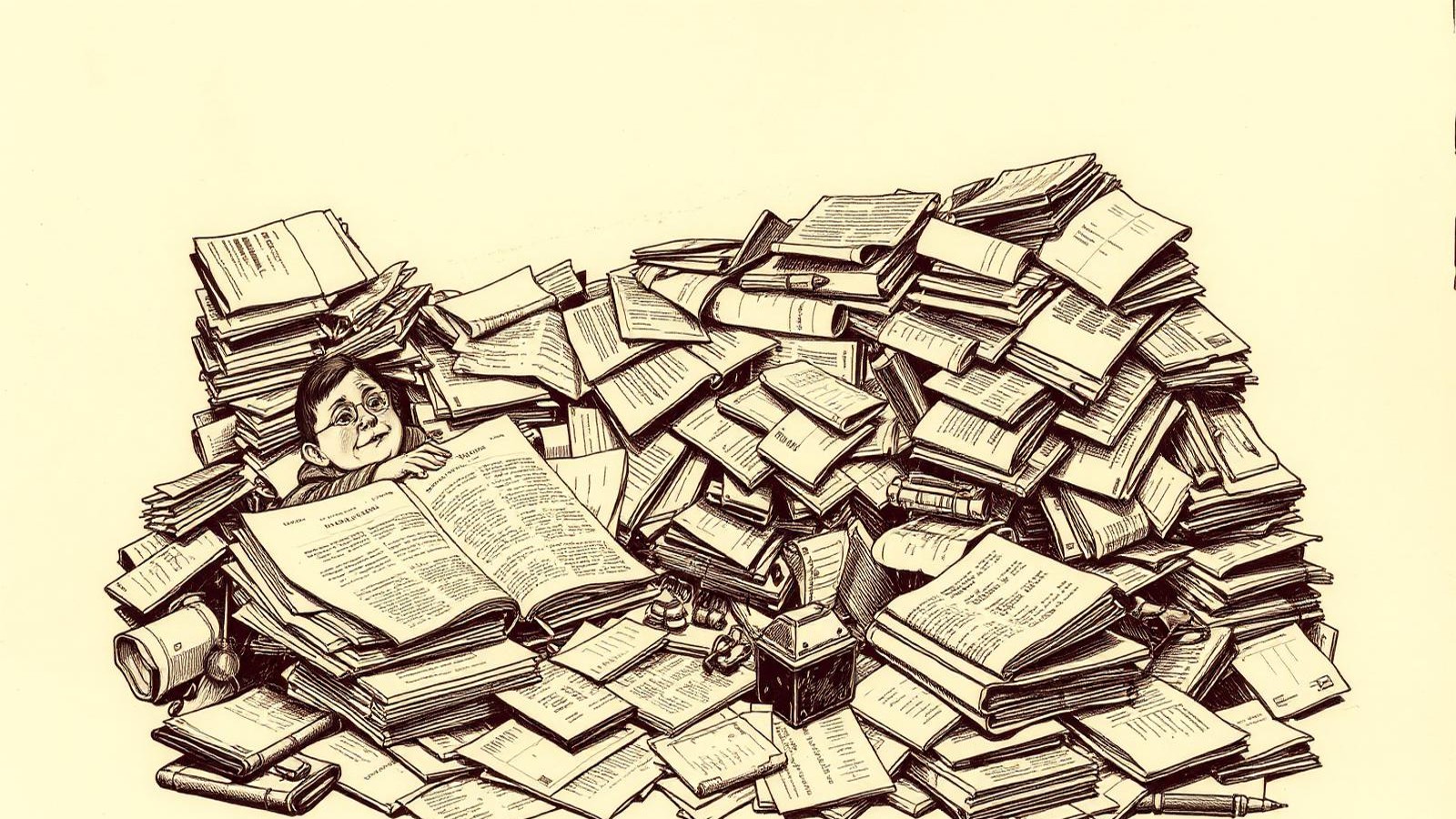
The internet was supposed to destroy this advantage by making information available to everyone. Instead, it created a different problem. We are no longer starved of information. We are drowning in it.
Every earnings call, SEC filing, government contract, executive appointment, options trade, policy announcement, shipping interruption, commodity movement, court filing and overseas conflict creates another fragment. The facts may be public, but the connections between them remain expensive. They require time, historical memory, financial literacy, specialized data and the ability to distinguish a meaningful signal from a headline engineered to create attention.
Information became public.
Context remained gated.
A Brief History of What Changed for You
Once, the disadvantage was not having access to the newspaper. Then it was not having a broker. Then it was not having a terminal. Today, you can hold more financial information in your hand than entire trading floors possessed a generation ago, yet the fundamental disadvantage remains because possession is not comprehension.
You can see that a stock is falling without knowing who is being forced to sell. You can see unusual options activity without knowing whether it represents speculation, insurance or part of a larger position. You can read that a chief executive resigned without knowing what happened the previous five times leadership changed inside that industry. You can hear that a government has approved billions in defense spending without knowing which public companies possess the contracts, production capacity and supply relationships required to receive it.
You receive the pieces separately. The institutions receive them as a system.
They have economists examining the cycle, lawyers reading the filing, analysts rebuilding the financial model, industry experts calling suppliers and machines comparing the event with decades of market behavior. They do not necessarily possess a magical fact unavailable to everyone else. Their advantage is that they can assemble ordinary facts into an extraordinary understanding before the rest of the market finishes reading the headline.
That is the modern creature: not secrecy alone, but organized comprehension.
Why Valencia Cross Exists
Valencia Cross was created for the person outside that room.
Not to sell fantasies about guaranteed returns. Not to pretend we possess illegal inside information. Not to replace evidence with paranoia or turn every coincidence into a plot. We exist because the playing field is not level, because the public record is too large for one person to digest, and because the story behind a market movement often matters more than the movement itself.
Throughout the week, we follow the fragments. We read the filings, leadership changes, contracts, earnings, economic releases, policy decisions, institutional disclosures, geopolitical developments and movements in price, volume and options. We search backward as aggressively as we search forward.
Has this happened before?
What stage of the cycle are we in?
What happened to this company the last time?
What happened to its competitors?
Where is capital moving?
What does the market appear to believe?
What evidence contradicts that belief?
Who benefits if the story is true?
Who pays if it is not?
We do not ask a machine to predict the future from a headline. We build the history around the event, examine what followed comparable events and then translate the evidence into a story that can be understood without a degree in finance.
We will tell you what is known, what is inferred and what remains unknown. We will show you the argument and the argument against it. We will not call speculation certainty simply because certainty is easier to sell.
Our purpose is not to become the creature.
Our purpose is to make its footprints visible.
This is the first and only open file in the Valencia Cross archive. Everything that follows is private—not because the underlying facts belong to us, but because finding the right facts, placing them in historical context and recognizing their relationship is the work.
The creature has always relied on distance: distance from the meeting, distance from the information, distance from the decision and distance from the moment when value changes hands.
We intend to shorten that distance.
The private car has already left the station.
This time, we are watching where it goes.
— Valencia Cross
Record Notes
The Jekyll Island narrative and monetary themes in this founding letter were inspired by G. Edward Griffin's The Creature from Jekyll Island: A Second Look at the Federal Reserve. The book presents a strongly critical interpretation of central banking. Valencia Cross distinguishes its interpretations from independently documented historical events.
The Federal Reserve's historical record confirms that a secret gathering took place on Jekyll Island in November 1910, that participants concealed their identities and that the resulting plan helped lay the foundation for the Federal Reserve System: The Meeting at Jekyll Island.
President Woodrow Wilson signed the Federal Reserve Act on December 23, 1913: Federal Reserve Act Signed into Law.
The United States suspended the dollar's convertibility into gold in 1971: Nixon and the End of the Bretton Woods System.
House and Senate financial-disclosure rules permit certain reportable securities transactions to be disclosed as late as 45 days after the transaction: House Committee on Ethics and Senate Select Committee on Ethics.