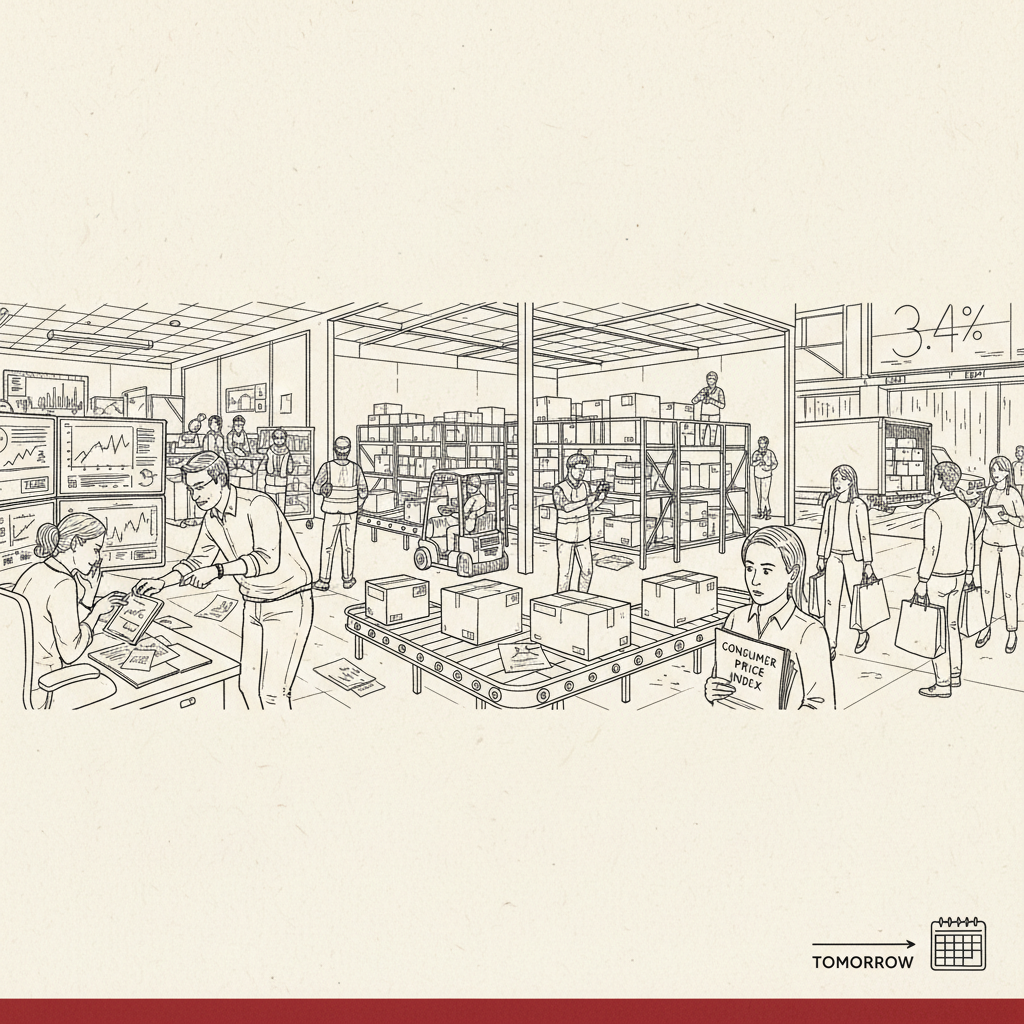
New inflation data, expected to be released tomorrow, will be crucial for the Federal Reserve’s interest rate decision. The report is anticipated to show that consumer prices rose 3.4% in August, according to Yahoo Finance. This figure represents the annual rate of inflation, which measures the percentage change in the price of goods and services purchased by consumers over the past year.
The details
Tomorrow's data release is the August Consumer Price Index (CPI) report, compiled by the Bureau of Labor Statistics (BLS). This report is expected to show a 3.4% rise in inflation, according to Investopedia. This specific data point is critical because it provides a comprehensive measure of the cost of living for consumers, directly informing the Federal Reserve's assessment of price stability, one of its dual mandates.
The Federal Reserve is currently divided on its approach to interest rates. Some officials may advocate for continued rate hikes to combat persistent inflation, while others might favor a pause to assess the impact of previous tightening measures on economic growth. The August CPI report will likely influence this internal debate, potentially tipping the scales toward one policy direction or another.
Complementing the consumer price data, wholesale inflation rose 5.4% annually in August. This increase, measured by the Producer Price Index (PPI), reflects the prices received by domestic producers for their output. Rising wholesale prices often precede increases in consumer prices, as businesses pass on higher input costs to consumers. This increase was attributed to rising energy costs, with Middle East conflicts linked to these rising energy costs, according to Sentinel Colorado. Energy costs, particularly oil prices, are a significant component of both wholesale and consumer inflation, affecting transportation, manufacturing, and ultimately, the prices of goods across the economy.
Internationally, the European Central Bank (ECB) raised interest rates on Thursday. This action aimed to cool inflation that is being fed by high oil prices from the Iran war, according to myMotherLode.com. The ECB's decision highlights a global trend of central banks responding to inflationary pressures, particularly those driven by energy costs and geopolitical events. Such international actions can also influence the Federal Reserve's considerations, as global economic conditions and inflation trends are interconnected.
Why it matters
The upcoming inflation number could determine if the Federal Reserve raises interest rates next week, according to TheStreet. A small surprise in the CPI report, either higher or lower than the anticipated 3.4%, could trigger a significant Federal Reserve rate decision. For instance, a higher-than-expected reading could reinforce the need for further tightening, while a lower reading might provide room for the Fed to pause. This key inflation reading could also determine if the Federal Reserve issues its first interest rate hike in over three years, according to CBS News. The last three years have seen a period of aggressive rate hikes followed by a pause, making any potential new hike a significant policy shift.
The mechanism by which interest rate decisions impact the economy is multifaceted. When the Federal Reserve raises interest rates, it increases the cost of borrowing for banks, which in turn leads to higher interest rates for consumers and businesses on loans such as mortgages, car loans, and credit cards. This increase in borrowing costs is intended to slow down economic activity by reducing demand, thereby alleviating inflationary pressures. Conversely, lower interest rates make borrowing cheaper, stimulating spending and investment.
The second-order effects of these decisions are far-reaching. Higher interest rates can cool an overheating economy, but they also risk slowing job growth and potentially leading to a recession. For individuals, higher rates mean increased costs for debt, potentially reducing disposable income and consumer spending. For businesses, higher borrowing costs can deter investment and expansion, impacting corporate profits and stock market performance. The housing market is particularly sensitive to interest rate changes, with higher mortgage rates typically leading to reduced demand and potentially lower home prices.
Market participants are closely watching this report, as it is considered more important than usual, according to CNBC. The Federal Reserve uses inflation data to guide its monetary policy decisions. These decisions affect borrowing costs and economic growth across various sectors of the economy. The market's reaction to the CPI data will reflect its expectations for future Fed policy and its implications for asset prices, including stocks, bonds, and commodities.
What to watch
The Bureau of Labor Statistics (BLS) will release the August consumer price index report tomorrow morning. Investors, economists, and policymakers will scrutinize the headline annual inflation rate, the month-over-month change, and core inflation measures, which exclude volatile food and energy prices. Any deviation from the consensus expectation of a 3.4% annual rise in consumer prices could prompt a significant market response and influence the Federal Reserve's upcoming policy meeting. The details within the report, such as inflation trends in specific sectors like housing, services, and energy, will also provide insights into the underlying drivers of price changes and the potential trajectory of future inflation.
Sources
- August’s inflation report will be crucial for the Fed’s interest rate decision — Yahoo Finance
- Small CPI surprise could trigger big Fed rate decision — TheStreet
- US wholesale prices rise in latest sign of stubborn inflation as oil prices continue to climb — Sentinel Colorado
- The CPI report arrives tomorrow. It could determine whether the Fed hikes rates next week. — CBS News
- What To Expect From Friday’s Inflation Report — Investopedia
Valencia Cross publishes research and commentary for informational purposes only. Nothing here is investment advice. Verify every figure against the linked primary sources.