Fed Governor Barr Indicates More Rate Hikes Likely Needed
Federal Reserve Governor Michael Barr stated on September 23, 2026, that additional interest rate increases will likely be necessary to control inflation and return it to the target level, citing persistent price pressures and a robust economy.
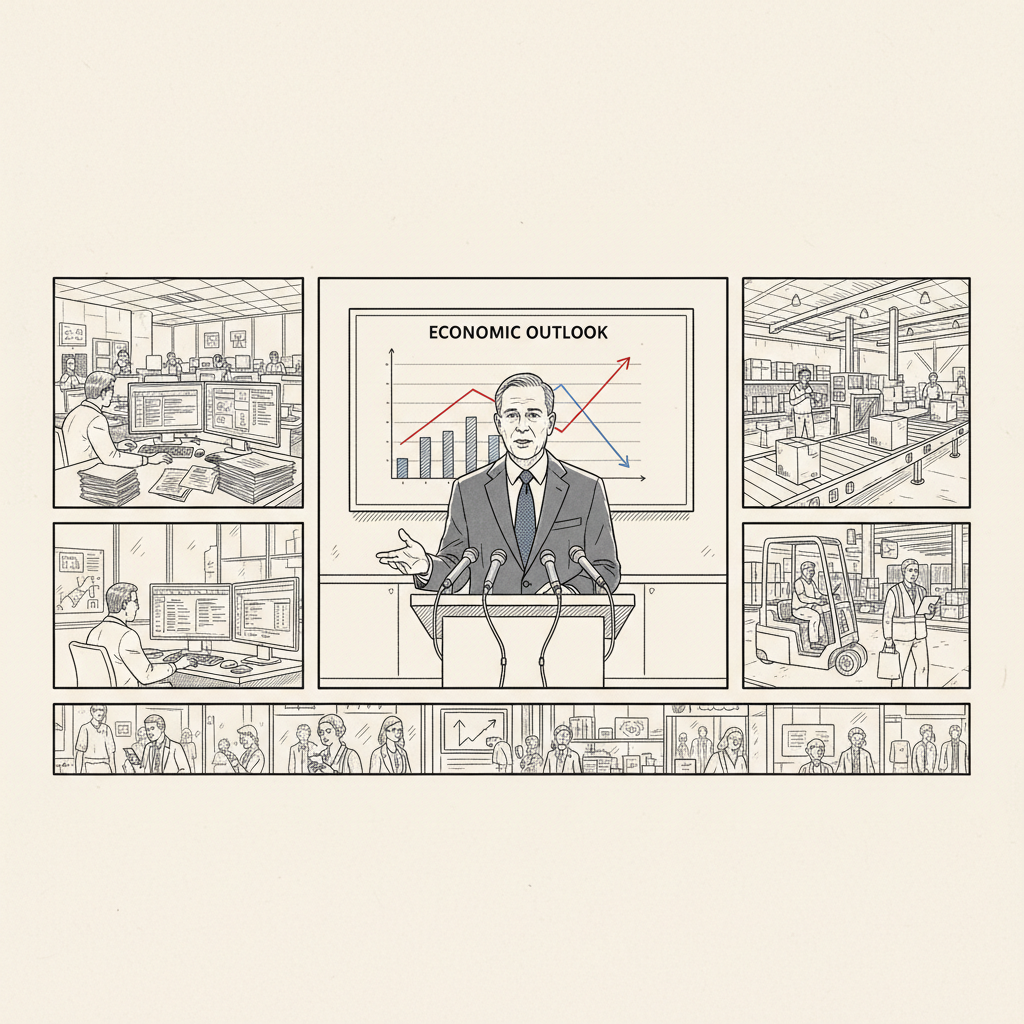
Federal Reserve Governor Michael Barr stated on September 23, 2026, that more interest rate hikes are likely needed. This action aims to return inflation to the target level, according to the Wall Street Journal. Barr's comments underscore the Federal Reserve's ongoing commitment to price stability amidst persistent economic pressures.
The details
Governor Barr noted that the economy has experienced a series of shocks over the past 18 months, which have contributed to upward price pressures. These shocks have created an environment where inflation remains elevated, necessitating further intervention from the central bank. Barr explicitly stated that the central bank will “likely” raise interest rates again to counter persistent inflation. This sentiment is echoed by broader market observations, with mounting inflation pressures and a strengthening economy pushing the Federal Reserve towards an interest-rate hike. Specifically, rising U.S. inflation, stronger economic activity, and surging energy costs are increasing market expectations for another Federal Reserve rate hike before the U.S. elections.
The Federal Reserve's primary mechanism for combating inflation involves adjusting the federal funds rate, which is the target rate for overnight lending between banks. By raising this rate, the Fed increases the cost of borrowing for commercial banks. These higher costs are then passed on to consumers and businesses through higher interest rates on loans for mortgages, auto purchases, and business investments. The intent is to reduce aggregate demand in the economy. When borrowing becomes more expensive, consumers tend to spend less, and businesses tend to invest less, thereby cooling economic activity and, in theory, alleviating inflationary pressures by reducing demand relative to supply.
Solid economic data indicates the U.S. economy is running hot, according to the Wall Street Journal. This strength is evidenced by robust retail sales, growing jobs, and firm inflation, which collectively suggest the U.S. economy can withstand higher interest rates, according to analysts. For example, strong retail sales figures indicate continued consumer demand, while consistent job growth points to a tight labor market, both of which can contribute to wage pressures and sustained inflation. The economy's resilience in the face of previous rate hikes provides the Fed with room to continue its tightening policy without immediately risking a severe downturn. This robust economic performance, coupled with persistent inflation, reinforces the market's expectation for further rate adjustments.
In contrast to the Fed's current stance, former President Trump has repeatedly urged the Federal Reserve to cut interest rates to 1%. However, analysts believe this demand is unrealistic and could backfire. A premature or drastic cut in interest rates, especially in an environment of 'running hot' economic data and persistent inflation, could exacerbate price pressures, potentially leading to a more entrenched inflationary cycle. Such a move would contradict the Fed's dual mandate of maximum employment and price stability, prioritizing short-term economic stimulus over long-term price stability.
Why it matters
The Federal Reserve's interest rate decisions have broad and direct implications across financial markets and the broader economy. When the Fed raises interest rates, it increases the cost of capital for businesses, which can lead to reduced investment, slower hiring, and potentially lower corporate earnings. For consumers, higher rates translate to more expensive borrowing for homes, cars, and credit card debt, which can dampen consumer spending and slow economic growth. The goal of these actions is to reduce aggregate demand, thereby bringing inflation back towards the Fed's 2% target.
Changes in interest rate expectations can significantly affect asset prices, particularly in volatile markets. For instance, Ether's (ETH) price moves quickly when these expectations shift. This is because higher interest rates can make riskier assets, like cryptocurrencies, less attractive compared to safer, yield-bearing investments such as government bonds. An inflation report and a Fed rate decision in September provided market reactions, Triad City Beat reported. These reactions demonstrate how closely market participants monitor economic indicators and central bank communications for cues on future monetary policy. The prospect of higher rates can lead to a 'flight to quality,' where investors move capital from speculative assets to more stable ones, impacting asset valuations.
Second-order effects of sustained higher interest rates include potential impacts on the housing market, where rising mortgage rates can cool demand and potentially lead to price corrections. Businesses reliant on debt financing may face increased operational costs, affecting profitability and expansion plans. Globally, a stronger U.S. dollar, often a consequence of higher U.S. interest rates, can make American exports more expensive and imports cheaper, affecting trade balances and potentially creating economic challenges for countries with dollar-denominated debt. The analysts' assessment that the U.S. economy's current strength, marked by robust retail sales and job growth, supports the capacity for higher rates suggests that the immediate risk of a recession from these hikes might be mitigated, but the long-term effects on various sectors will still materialize. These conditions contribute to market expectations for further rate adjustments, influencing investment strategies and economic forecasts across industries.
What to watch
Market participants will monitor future Federal Reserve announcements and economic data releases for indications of upcoming interest rate decisions. Key data points include inflation reports (e.g., Consumer Price Index, Personal Consumption Expenditures), employment figures (e.g., non-farm payrolls, unemployment rate), and retail sales data. Speeches and statements from Federal Reserve officials, such as Governor Barr, will also be closely scrutinized for shifts in policy outlook or economic assessments. The trajectory of energy costs and the broader geopolitical landscape will also be relevant, as these factors have contributed to recent inflationary pressures. Any divergence in economic data from the Fed's projections could signal a change in the pace or magnitude of future rate adjustments, prompting market re-evaluations and asset price volatility.
Sources
- Fed’s Barr Says More Rate Hikes Likely Needed to Return Inflation to Target — WSJ
- Trump Once Again Urges the Fed to Cut Rates to 1%, Analysts Say It Is Unrealistic and Could Backfire — NAI500
- Solid Economic Data Show U.S. Economy Running Hot Ahead of Fed Decision — WSJ
- Fed’s Barr says future interest rate hikes ‘likely’ needed to tame inflation — The Hill
- Why Inflation and Fed Policy Move ETH to USD — Triad City Beat
- Rising Inflation and Strong Growth Increase Bets on Another Fed Rate Hike Before US Elections — Межа. Новини України.
- Mounting inflation pressures put more Fed rate hikes in view — The Korea Times
Valencia Cross publishes research and commentary for informational purposes only. Nothing here is investment advice. Verify every figure against the linked primary sources.