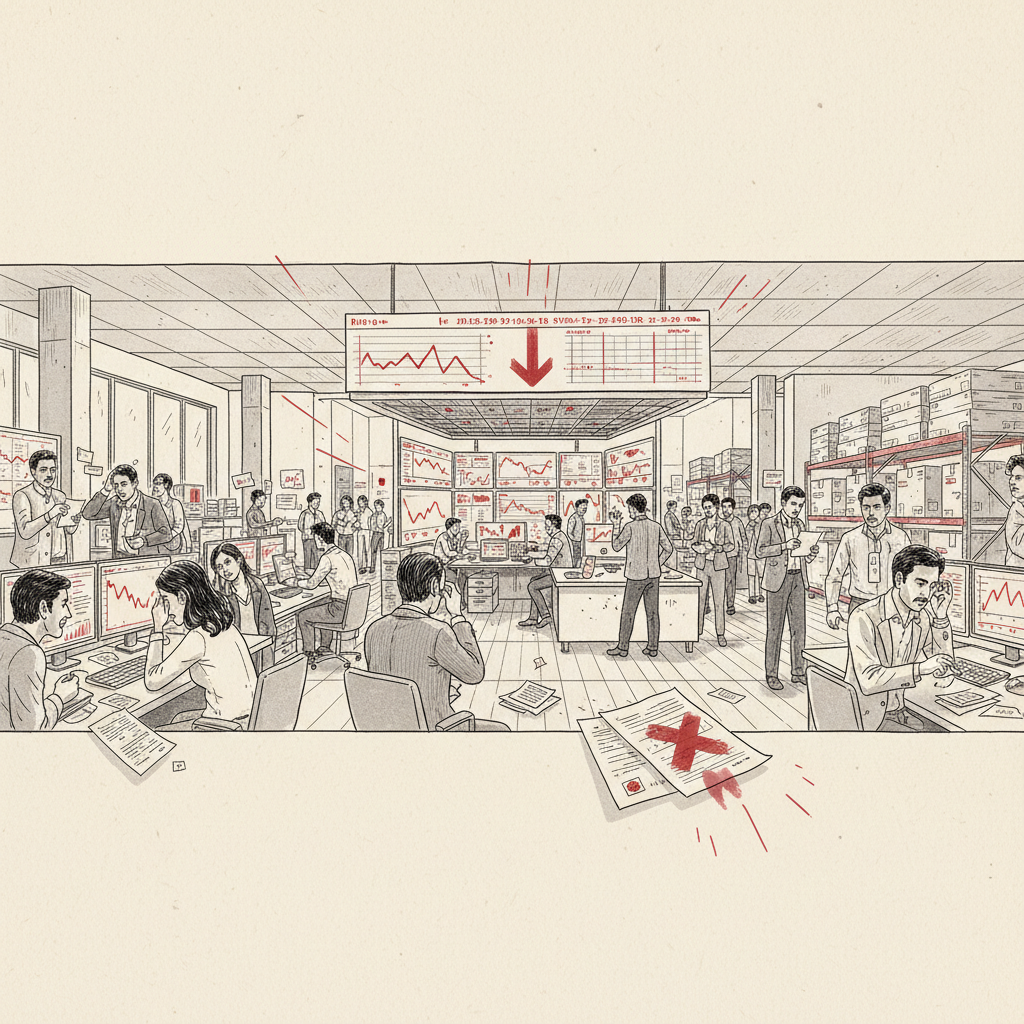
Indian stock markets fell sharply on September 28 and 29, 2026. SMEStreet analyzed the reasons behind the Nifty 50 and Bank Nifty decline.
The details
On September 28, 2026, the Sensex plunged 1,124 points, closing below 72,800. The Nifty also shed points, reaching May 2024 lows. This single-day event resulted in the wipeout of nearly Rs 8 lakh crore of investors' wealth. Concurrently, Reliance Industries shares hit a new 52-week low, falling below Rs.1200 in intraday trade on the BSE. The stock had already plunged 24% year-to-date by August 28. The sell-off continued into September 29. GIFT Nifty October 2026 futures were down 22 points, signaling a negative opening for the Nifty 50 amid weak global cues.
Key reasons for this market decline included foreign portfolio investor (FPI) selling, rising crude oil prices, and tax hikes. Weak global cues also contributed to the negative sentiment. These elements collectively impacted market performance. The Nifty 50 and Bank Nifty indices were particularly affected by these pressures.
Why it matters
The sharp market decline significantly affected investor wealth, with Rs 8 lakh crore wiped out in a single day. The Nifty 50 and Bank Nifty are benchmark Indian market indices, and their performance serves as a key indicator of broader market health. A substantial fall in these indices signals market instability and can erode investor confidence. The decline of the Sensex and Nifty to May 2024 lows indicates a reversal of previous gains and a significant downward trend.
Mechanism Explanation and Second-Order Effects:
Foreign Portfolio Investor (FPI) Selling: FPIs are institutional investors from outside India who invest in Indian markets. When FPIs sell their holdings, it represents a withdrawal of foreign capital from the market. This selling pressure increases the supply of shares, driving down prices. The mechanism behind this is a reduction in demand relative to supply for Indian equities. A sustained outflow of foreign capital can lead to reduced liquidity in the market, making it harder for other investors to buy or sell large blocks of shares without significantly impacting prices. Second-order effects include a weakened rupee, as FPIs convert their rupee proceeds back into foreign currency, and a potential increase in borrowing costs for Indian companies if foreign lenders perceive higher risk.
Rising Crude Oil Prices: India is a major importer of crude oil. An increase in global crude oil prices directly impacts India's import bill, leading to a larger current account deficit. For businesses, rising crude oil prices translate to higher input costs, particularly for sectors like manufacturing, transportation, and aviation. This mechanism reduces corporate profit margins and can lead to inflationary pressures as companies pass on increased costs to consumers. Second-order effects include reduced consumer spending power due to higher fuel and commodity prices, which can dampen overall economic growth. It also puts pressure on the government's budget through increased subsidies or reduced tax revenues if economic activity slows.
Tax Hikes: Specific tax hikes, though not detailed in the sources, can impact market sentiment and corporate profitability. If these are corporate tax hikes, they directly reduce companies' net earnings, making their stocks less attractive to investors. If they are indirect taxes or taxes affecting consumer disposable income, they can reduce consumer demand, impacting sales and revenues for businesses. The mechanism is a direct reduction in either corporate profitability or consumer spending capacity. Second-order effects include a potential slowdown in economic activity, reduced corporate investment, and a shift in investment patterns as investors seek more tax-efficient avenues or sectors less affected by the hikes.
Weak Global Cues: Global economic or geopolitical events can influence investor sentiment in India. For example, concerns about global economic growth, interest rate hikes by major central banks, or international conflicts can lead to a risk-off sentiment globally. This mechanism causes investors to withdraw from emerging markets like India and move towards safer assets. Second-order effects include reduced foreign direct investment (FDI), increased volatility in the Indian market as it reacts to international developments, and a potential contagion effect where negative sentiment from one market spreads to others.
These combined pressures create a negative feedback loop: FPI selling leads to lower prices, which further dampens sentiment, potentially triggering more selling. Rising costs and reduced profitability make companies less attractive, contributing to the market downturn. The overall sentiment became negative due to these combined pressures, creating a challenging environment for investors.
What to watch
Market participants will continue to monitor institutional flows, particularly FPI activity, as their buying or selling patterns can significantly influence market direction. Global cues, including economic data from major economies and geopolitical developments, will be observed for their potential impact on investor sentiment and capital flows. Movements in crude oil prices remain a critical factor due to India's import dependence and the direct impact on corporate costs and inflation. Future government policy announcements, including any further tax changes or economic stimulus measures, will be relevant as they can alter the operating environment for businesses and investor confidence. These factors may influence market direction in the coming weeks and months, determining whether the market stabilizes, continues its decline, or begins a recovery.
Sources
- Indian Stock Market Sell-Off: Why Nifty and Bank Nifty Are Falling and What Retail Investors Should Do Now — SMEStreet
- GIFT Nifty signals weak opening as FPI selling, rising crude weigh on sentiment — Business Standard
- Bitcoin Remains Resilient Despite Volatility: $87,400 Is The Level To Break — Yellow.com
- Are We Officially in a Crypto Bull Run? Should You Accumulate Top Altcoins Now or Wait for a Dip — Cryptonews.net
- Reliance shares hit a fresh 52-week low; stock plunges 24% YTD - Time to buy or stay away? — TradingView
- Rs 8 lakh crore investors’ wealth wiped out as Sensex plunges 1,124 points: What triggered the crash? — The Statesman
- India stock market crash wipes 1,000 points off Sensex, drags Nifty to 2024 lows — The Cryptonomist
Valencia Cross publishes research and commentary for informational purposes only. Nothing here is investment advice. Verify every figure against the linked primary sources.