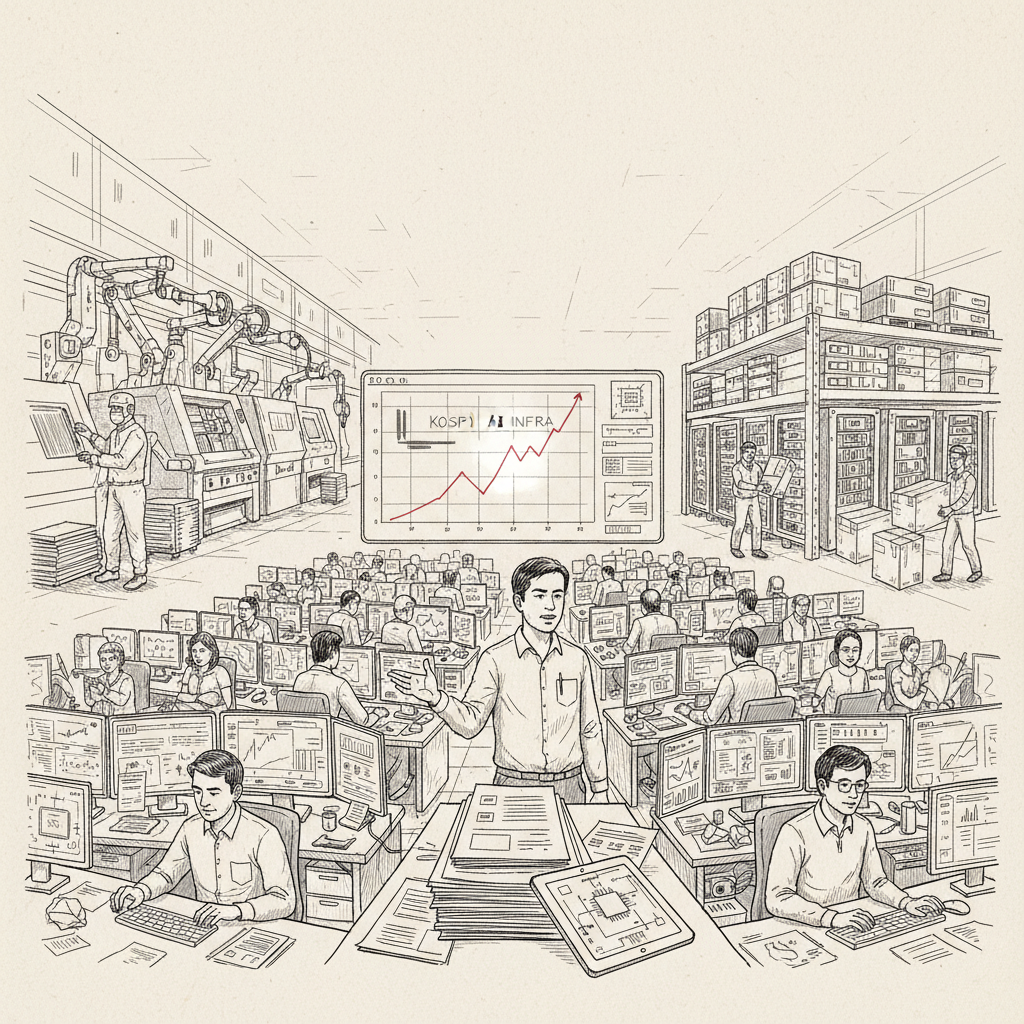
AI-related capital spending is refocusing attention on the KOSPI as of September 27, 2026. This development aligns with semiconductor sentiment and buybacks from Samsung Electronics and SK Hynix, according to Simply Wall Street.
The details
Samsung Electronics and SK Hynix are undertaking buybacks. These actions, combined with semiconductor sentiment, are drawing attention to KOSPI AI infrastructure stocks. The KOSPI is a stock market index in South Korea. The specific AI infrastructure stocks benefiting were not named in the provided information.
The mechanism behind this increased attention involves the direct and indirect impacts of AI-driven capital expenditure (CapEx). AI infrastructure development necessitates significant investment in hardware, including advanced semiconductors, data centers, and related components. Companies like Samsung Electronics and SK Hynix are central to the semiconductor supply chain, producing memory chips (DRAM, NAND flash) and logic chips critical for AI processing. Their strategic buybacks can signal financial strength and confidence in future growth, potentially driven by anticipated demand for AI-related components. As these major players invest in their own operations and the broader AI ecosystem, it creates a ripple effect, benefiting other companies within the KOSPI that supply materials, equipment, or services for AI infrastructure. The increased capital spending by these semiconductor giants directly translates to demand for components and services from their suppliers, many of whom are listed on the KOSPI.
Why it matters
AI is driving investment surges. This surge is reshaping the electronic chemicals and materials industry, according to GlobeNewswire. AI assists semiconductor makers in improving yields, detecting defects earlier, and accelerating the discovery of next-generation materials. This mechanism involves the application of AI algorithms to optimize manufacturing processes, analyze vast datasets from production lines, and simulate molecular structures for new material development. By improving yields, semiconductor manufacturers can produce more functional chips from the same amount of raw material, reducing waste and increasing efficiency. Early defect detection prevents costly processing of faulty components, saving resources and time. Accelerating material discovery can lead to breakthroughs in chip performance, energy efficiency, and new functionalities, which are crucial for advancing AI hardware itself.
Taiwan Semiconductor Manufacturing Company (TSMC) is a central beneficiary of the AI-driven capital expenditure surge, according to Seeking Alpha. Hyperscalers' spending is projected to reach $1.3 trillion in 2027. Hyperscalers, such as major cloud service providers, are investing heavily in data centers and specialized AI hardware to support the growing demand for AI computing. TSMC, as a leading contract chip manufacturer, fabricates the advanced processors (like GPUs and custom AI accelerators) that power these hyperscale AI operations. This makes TSMC a critical bottleneck and a primary recipient of this substantial CapEx. The projected $1.3 trillion spending by hyperscalers in 2027 indicates a sustained and significant demand for advanced semiconductor manufacturing, directly benefiting companies like TSMC and, by extension, their supply chain partners.
Corporate AI spending in 2026 helped offset some global economic fallout from the Middle East energy shock, creating a capital wave, according to CryptoRank. The OECD reported this, and also lifted its 2026 growth forecast due to AI spending. This demonstrates a macroeconomic impact: substantial corporate investment in AI infrastructure and capabilities can act as a counter-cyclical force, stimulating economic activity even amidst geopolitical or energy-related disruptions. The capital wave generated by AI spending flows into various sectors, including technology, manufacturing, and even construction for new data centers, thereby contributing to GDP growth and employment. The OECD's revised growth forecast underscores the significant role AI investment is playing in the global economy, suggesting that the economic benefits of AI adoption are already materializing at a macro level.
What to watch
The OECD warns that the 2027 outlook is darkening, according to CryptoRank. This caution suggests that while AI spending is currently a positive economic driver, other factors may emerge or intensify to create headwinds for the global economy in the following year. Potential factors could include persistent inflation, higher interest rates, geopolitical instability, or a slowdown in other economic sectors, which could temper the overall positive impact of AI investments.
The United States' AI investment is projected to reach $10.3 trillion, surpassing historic railroad spending, according to Chosun Ilbo. This outlay is expected to reshape the economy amid rising costs and risks. The comparison to historic railroad spending highlights the transformative potential and scale of AI investment. The railroad expansion in the 19th century fundamentally reshaped economies by enabling efficient transportation of goods and people, fostering industrial growth, and connecting markets. Similarly, a $10.3 trillion investment in AI infrastructure, research, and development is anticipated to drive a comparable, if not greater, transformation across industries, from healthcare and finance to manufacturing and logistics.
However, this massive investment also comes with second-order effects and associated risks. The rising costs could refer to the increasing expense of developing and deploying advanced AI systems, including specialized hardware, talent acquisition, and energy consumption for data centers. Risks might include the potential for job displacement due to automation, ethical concerns regarding AI deployment, cybersecurity vulnerabilities, or the concentration of AI power among a few dominant players. The economic reshaping could involve significant shifts in labor markets, the creation of new industries, and the obsolidation of others, leading to both opportunities and challenges for policymakers and society. The sheer scale of this investment suggests that AI is not merely an incremental technological advancement but a foundational shift with profound and lasting economic and societal implications, requiring careful monitoring of both its benefits and potential drawbacks.
Sources
- 3 KOSPI AI Infrastructure Stocks Riding Samsung And SK Hynix Data Center Spending — Simply Wall Street
- AI-Driven Investment Surge Reshapes the Electronic Chemicals and Materials Industry — GlobeNewswire
- Taiwan Semiconductor: AI CapEx Keeps Climbing, And TSMC Looks Undervalued (NYSE:TSM) — Seeking Alpha
- US AI Investment Surpasses Historic Railroad Spending — 조선일보
- OECD lifts 2026 growth forecast on AI spending, warns 2027 outlook is darkening — CryptoRank
Valencia Cross publishes research and commentary for informational purposes only. Nothing here is investment advice. Verify every figure against the linked primary sources.