Maverick Simulation Raises Funds, Acquires Voxel-Man
Maverick Simulation secured ₹125 crore from three investors and will acquire Voxel-Man for ₹260 crore in shares. This move signals strategic expansion and integration within the private market landscape.
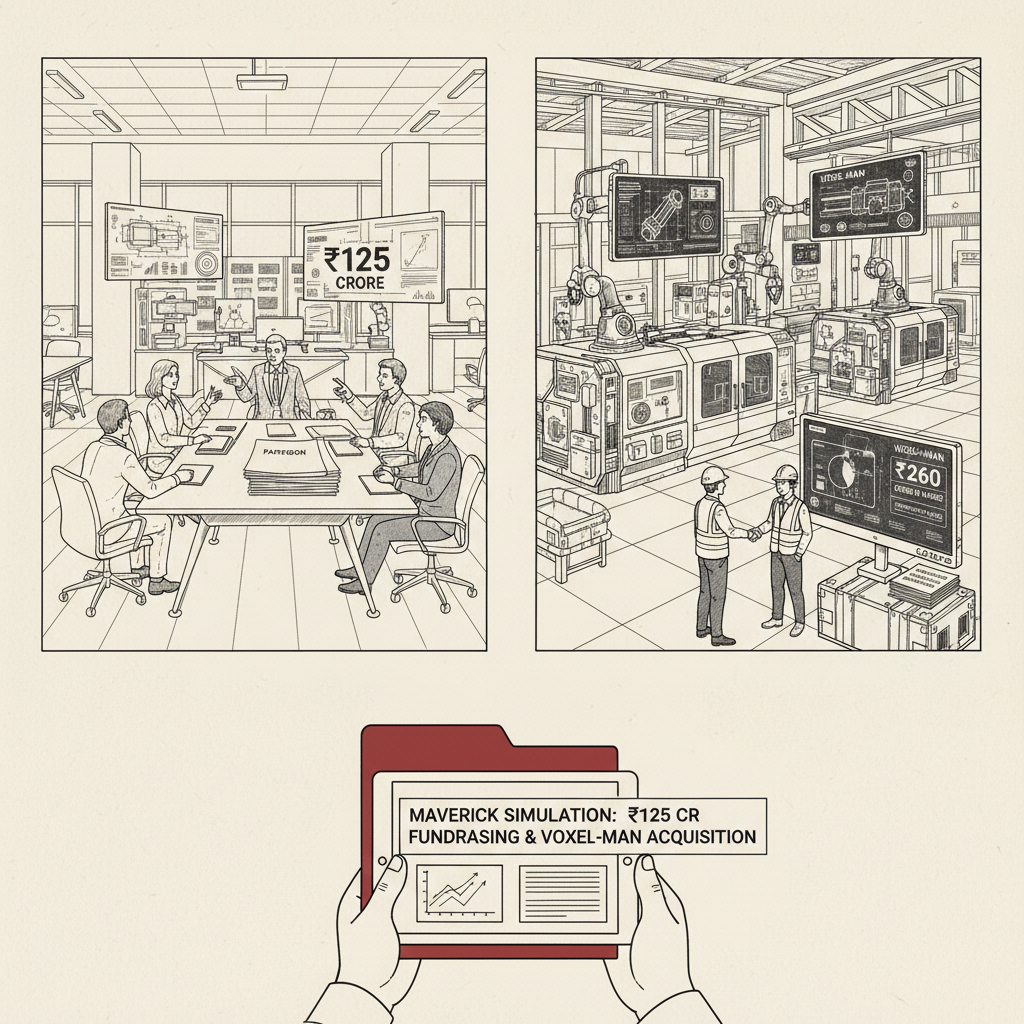
Maverick Simulation raised ₹125 crore from Paragon, VantEdge, and Inviga. The company also announced the acquisition of Voxel-Man for ₹260 crore in shares. This information was reported on September 30, 2026, according to UnlistedZone.
The details
Maverick Simulation's fundraising round totals ₹125 crore. This capital infusion originates from three distinct investors: Paragon, VantEdge, and Inviga. Concurrently, Maverick Simulation is acquiring Voxel-Man. The stated acquisition price for Voxel-Man is ₹260 crore. This transaction will be conducted using shares, meaning Voxel-Man shareholders will receive Maverick Simulation shares as consideration for their ownership stake. This method of acquisition, where shares of the acquiring company are exchanged for shares of the target company, is a common practice in private markets. It allows the acquiring company to conserve cash while integrating the target company's ownership into its own equity structure. The specific terms regarding the number of shares exchanged or the valuation metrics used for the share swap were not disclosed in the initial report.
Why it matters
This dual transaction indicates a strategic expansion for Maverick Simulation. The capital raise provides funding for operations, potential research and development, or further growth initiatives. Accessing capital from private investors like Paragon, VantEdge, and Inviga is characteristic of the private market, where companies secure funding outside of public stock exchanges. This type of investment often involves a longer-term outlook compared to public market investments.
The acquisition of Voxel-Man expands Maverick Simulation's market presence or capabilities. Acquisitions can provide access to new technologies, customer bases, or talent pools. For example, if Voxel-Man operates in a complementary sector or possesses proprietary technology, its integration could enhance Maverick Simulation's competitive position. The use of shares for the acquisition aligns the interests of Voxel-Man's previous owners with Maverick Simulation's future performance. By becoming shareholders in Maverick Simulation, the former owners of Voxel-Man have a vested interest in the combined entity's success, potentially fostering a smoother integration and incentivizing continued collaboration.
This structure is common in private market transactions, where private equity firms like Aspirity and Partners Group are active. Aspirity recently completed a €100m+ deal after raising its debut fund last year, acquiring a majority stake in a Danish connectivity firm. This demonstrates the ongoing activity in private equity, where firms deploy capital from their funds to acquire stakes in companies. Partners Group, another significant player, deployed close to €2 billion across 23 European direct-lending investments this year. Direct lending involves private funds providing loans directly to companies, often bypassing traditional banks. However, Partners Group's shares fell 40% year-to-date, indicating that even active private market players can face public market scrutiny and challenges.
The broader private market landscape has seen varied performance. While some sectors attract significant investment, others have proven challenging. For instance, venture capital's bet on the fashion industry reportedly failed, indicating that not all private market investments yield expected returns. This suggests that while capital is available, investment decisions are subject to market dynamics and sector-specific risks. The current environment also sees shifts in broader financial markets; for example, gold and silver prices crashed as the 10-year yield topped 5.2% on September 30, 2026. Such macroeconomic factors can influence investor sentiment and the cost of capital, potentially affecting future private market transactions and valuations.
What to watch
Further details regarding the integration of Voxel-Man into Maverick Simulation's operations are unconfirmed. The success of the acquisition will depend on how effectively Voxel-Man's assets, personnel, and operations are merged with Maverick Simulation's existing structure. Specific financial disclosures or regulatory filings related to the share-based acquisition and the capital raise are not yet public. These documents would typically provide more granular information on valuation methodologies, shareholder agreements, and the strategic rationale behind the transactions. The performance of Maverick Simulation's shares, particularly those issued to Voxel-Man's former owners, will be a key indicator of the market's perception of this combined entity. The impact of the ₹125 crore capital raise on Maverick Simulation's balance sheet and its deployment towards growth initiatives will also be relevant. The broader private market environment, including interest rate trends and investor appetite for private deals, will continue to influence the context in which Maverick Simulation operates.
Sources
- Maverick Simulation: ₹125 Cr Raise & Voxel-Man Deal — UnlistedZone — UnlistedZone
- Why private equity’s fashion bet failed and what founders are doing instead — Monocle — Monocle
- Aspirity buys majority stake in Danish connectivity firm — Private Equity News — Private Equity News
- Partners Group's €2 Billion Lending Push Meets a Market That Isn't Buying It — AD HOC NEWS — AD HOC NEWS
- Gold and silver crash as 10-year yield tops 5.2% — TheStreet — TheStreet
Valencia Cross publishes research and commentary for informational purposes only. Nothing here is investment advice. Verify every figure against the linked primary sources.