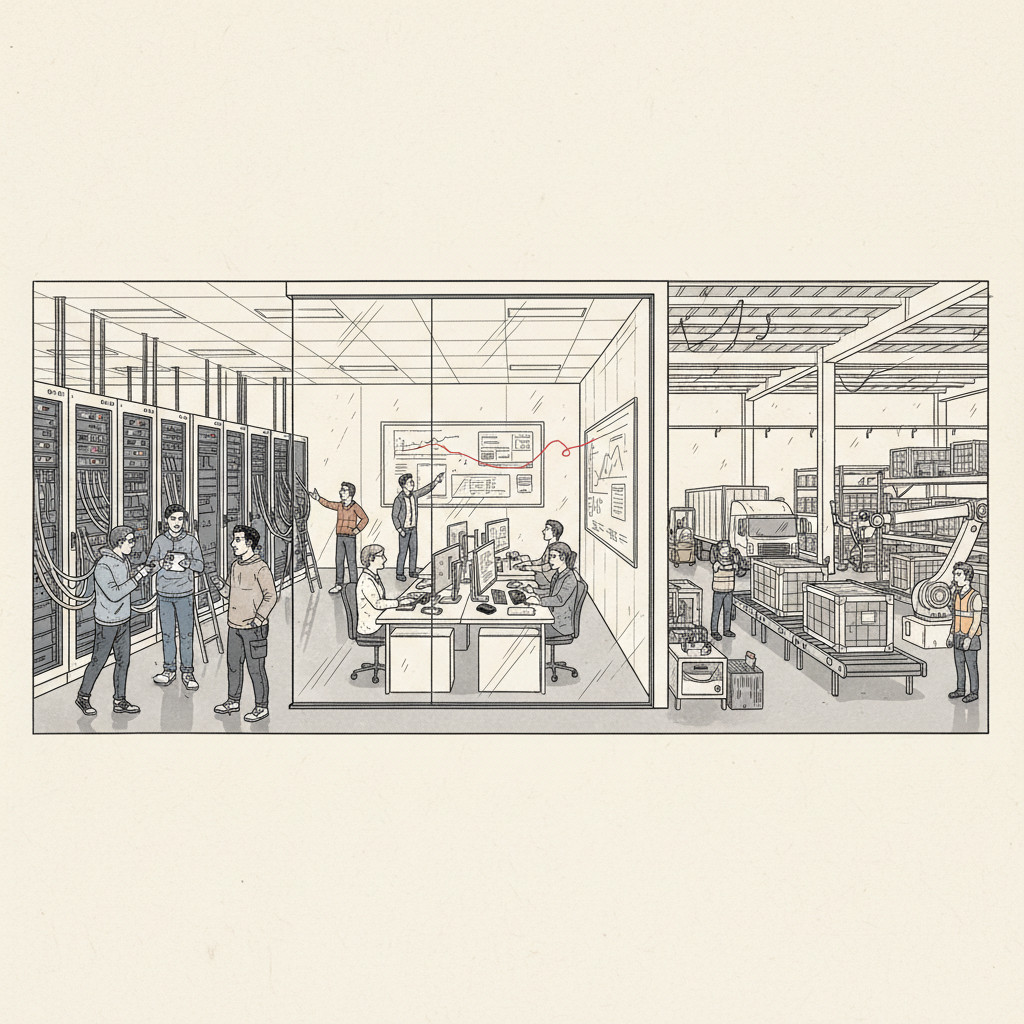
Technology companies are sharply increasing capital spending. This trend began by September 5, 2026. It encompasses firms in semiconductors, software, communications equipment, and AI-related industries. The increase is a response to rising demand, according to Seeking Alpha.
The details
This increase in capital expenditure is driven by demand for artificial intelligence (AI) infrastructure. Technology companies are spending heavily to meet this demand. The AI sector is experiencing one of the largest data center investment booms in its history. Global capital investment in AI facilities is projected to reach a cumulative $31.6 trillion by 2050, according to CoStar and the Taipei Times. This spending is intended to satisfy the growing global demand for AI. The bulk of this spending will occur between 2030 and 2050.
The mechanism behind this capital expenditure surge involves the foundational requirements for AI development and deployment. AI models, particularly large language models and other complex algorithms, require immense computational power and data storage. This necessitates the construction and expansion of specialized data centers equipped with high-performance computing hardware, advanced cooling systems, and robust power infrastructure. The increased capital spending directly funds the acquisition of these components and the development of the physical facilities. Companies in the semiconductor industry are investing in research, development, and manufacturing capacity for AI-specific chips (e.g., GPUs, TPUs) that are essential for AI workloads. Software companies are investing in the platforms and tools that manage and optimize these AI infrastructures, while communications equipment providers are enhancing network capacities to handle the massive data flows generated by AI applications.
Global capital is increasingly flowing into physical infrastructure beyond just the direct technology components. This creates a commercial property and casualty (P&C) growth opportunity. Swiss Re estimates this opportunity could generate approximately $200 billion in commercial insurance. This indicates a broader economic impact extending beyond the direct technology providers. The construction of new data centers, for instance, requires significant insurance coverage for property, liability, and construction risks. This investment boom is impacting various sectors beyond technology. For example, the demand for AI data centers is providing a significant boost to the trucking industry. This new customer has become a key lifeline for truckers, as noted by The Tech Buzz. While tariffs and a soft freight market have previously affected the trucking industry, the AI data center boom is providing a new source of demand for transportation services, specifically for moving heavy equipment, servers, and construction materials to data center sites.
Why it matters
The sharp increase in capital spending by technology companies reflects a significant market shift. The demand for AI infrastructure is a primary driver. This demand is leading to substantial investments across multiple industries. The commercial insurance sector anticipates a large opportunity from this infrastructure investment, estimated at $200 billion. This indicates a broad economic impact extending beyond the direct technology providers. The trucking industry's experience demonstrates how the AI data center boom creates second-order economic effects. This suggests a wider ripple effect across the economy.
The projected cumulative global capital spending on data centers of $31.6 trillion by 2050 highlights the scale and long-term nature of this investment. This level of spending indicates a sustained commitment to AI infrastructure development, with the majority of this investment expected in the coming decades. This investment is not confined to a single sector. It involves semiconductors, software, communications equipment, and AI-related industries. This broad engagement suggests a fundamental reorientation of capital towards AI-driven infrastructure, impacting supply chains, labor markets, and energy consumption.
Second-order effects of this investment boom include increased demand for skilled labor in construction, electrical engineering, and IT operations to build and maintain these facilities. The substantial energy requirements of AI data centers will also drive investment in power generation and distribution infrastructure, potentially accelerating the transition to renewable energy sources or increasing demand for existing grids. The logistical challenges of transporting and installing massive amounts of hardware will continue to benefit industries like trucking and specialized logistics. Furthermore, the concentration of capital spending in AI infrastructure could divert investment from other sectors, potentially reallocating resources within the global economy. The need for robust cybersecurity measures for these critical infrastructures will also intensify, creating further investment opportunities in that domain.
What to watch
Further disclosures on capital expenditure plans from technology companies will provide additional insight. Industry reports detailing investment trends in semiconductors, software, communications equipment, and AI-related industries are also relevant. Specific financial filings from companies involved in AI infrastructure development will offer concrete data points. Monitoring the growth trajectory of the commercial insurance market for infrastructure projects, particularly those related to data centers, will indicate the broader financial implications. Observing the freight volumes and revenue trends within the trucking industry, specifically those linked to data center construction and supply, will serve as a tangible indicator of the economic ripple effects. Tracking global energy consumption patterns and infrastructure development in response to data center demands will also be crucial. The allocation of the $31.6 trillion in projected spending, particularly the distribution between direct technology components and broader infrastructure, will clarify the evolving landscape of AI investment.
Sources
- AI Infrastructure Capex Race: These tech stocks are stepping up spending (MU:NASDAQ) — Seeking Alpha
- Swiss Re sees $200 billion commercial insurance opportunity from infrastructure investment boom — theinsurer.com
- AI Data Center Boom Gives Truckers Rare Win — The Tech Buzz
- News | Global capital spending on data centers projected to top $31 trillion by 2050 — CoStar
- Data center spending to reach US$31.6tn by 2050 — Taipei Times
- 4 Stocks to Buy Now to Ride the AI Data Center Spending Boom — The Globe and Mail
Valencia Cross publishes research and commentary for informational purposes only. Nothing here is investment advice. Verify every figure against the linked primary sources.